Root Causes, Root Remedies: How Natural Compounds Target PCOS at Its Source
Publication 13
The Search for a Balanced Approach
If you've been following along on Lucky Vera, you already know how complex PCOS can be — the hormonal chaos, the metabolic hurdles, the frustrating cycles. We've covered the condition extensively here. But this post isn't really about PCOS. It's about what nature might be able to do about it.
A landmark systematic review published in March 2026 made a compelling case for natural compounds as serious players in hormonal health — not as replacements for medicine, but as multi-targeted tools that work on the root drivers of hormonal dysfunction in ways pharmaceuticals often can't.
Behind the Scenes:
Study Overview
The insights shared in this deep dive are synthesized from a comprehensive 2026 review that bridges the gap between traditional herbal wisdom and rigorous laboratory analysis.
Research Type: A high-level systematic review and current perspective published in the journal Nutrients (March 2026).
The Goal: To map how bioactive natural compounds modulate the metabolic-endocrine axis, alleviate oxidative stress, and restore the delicate balance of the gut microbiome.
Scope: An analysis of multi-targeted biological pathways across both preclinical evidence (animal models) and clinical evidence (human randomized controlled trials).
The PCOS Vicious Cycle:
Why Nature Matters
PCOS is rarely driven by a single "broken" pathway. Instead, it is characterized by a "self-amplifying cycle" where metabolic and endocrine systems become locked in a negative feedback loop.
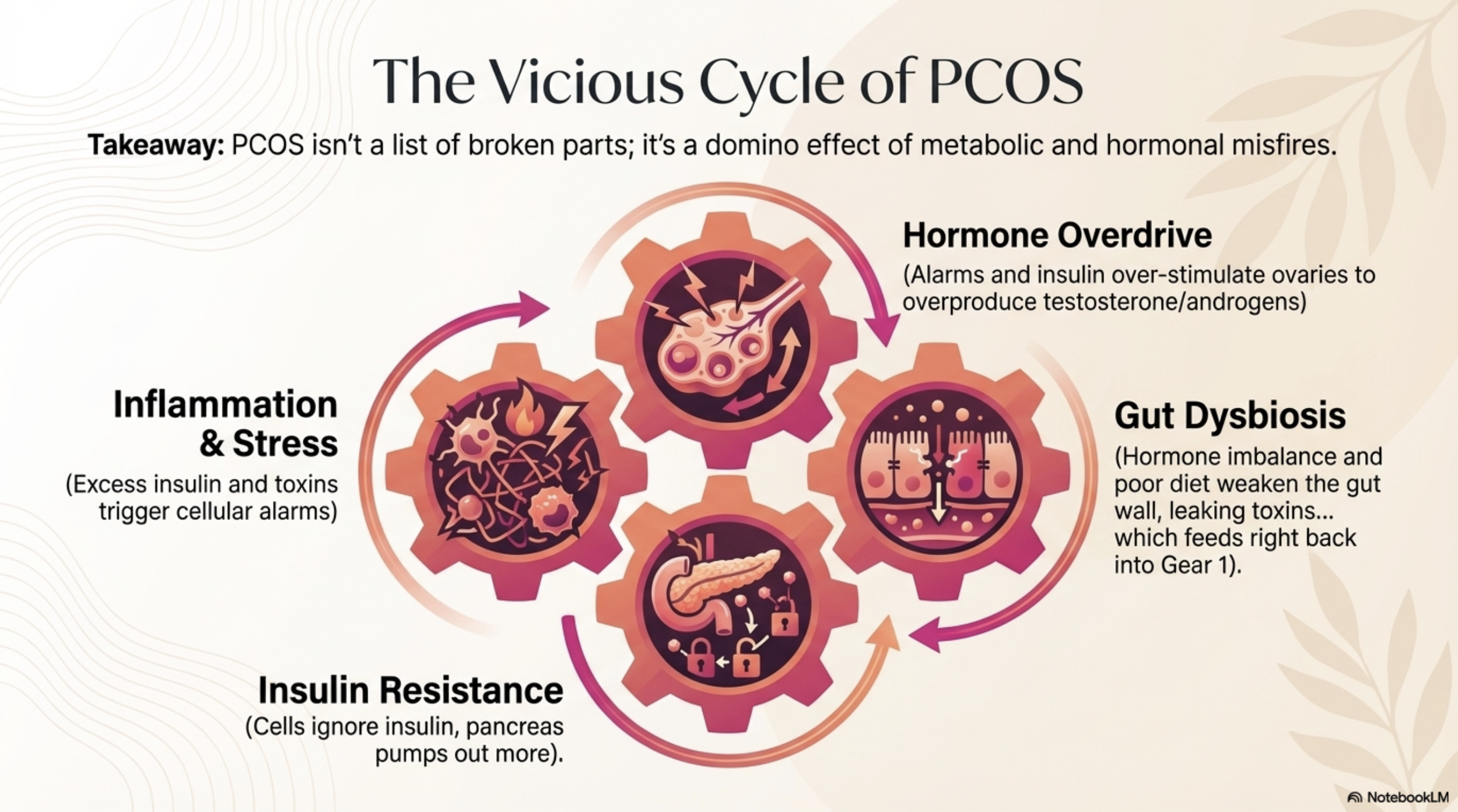
The Dysregulation Flowchart:
Obesity & Insulin Resistance → Trigger Hyperinsulinemia (excess insulin in the blood).
Hyperinsulinemia & Fatty Liver → Lead to a drop in SHBG (Sex Hormone-Binding Globulin).
Suppressed SHBG → Spikes levels of Free Testosterone, while the Adrenal Glands concurrently contribute excess DHEAS, compounding the androgen burden alongside ovarian sources.
Hormonal Excess → Disrupts the Hypothalamic-Pituitary-Ovarian (HPO) axis, elevating the LH-to-FSH ratio.
Axis Dysfunction → Results in ovulatory failure, acne, and polycystic ovarian morphology, reinforcing weight gain and restarting the cycle.
While first-line treatments like oral contraceptives or Metformin provide relief, they often carry adverse effects—such as gastrointestinal distress or cardiovascular risks—necessitating the search for natural, multi-targeted alternatives that can modulate these pathways more gently.
Key Findings:
The Natural "Toolkit" for PCOS
The 2026 review identifies three primary biological "arenas" where natural products intervene to restore homeostasis:
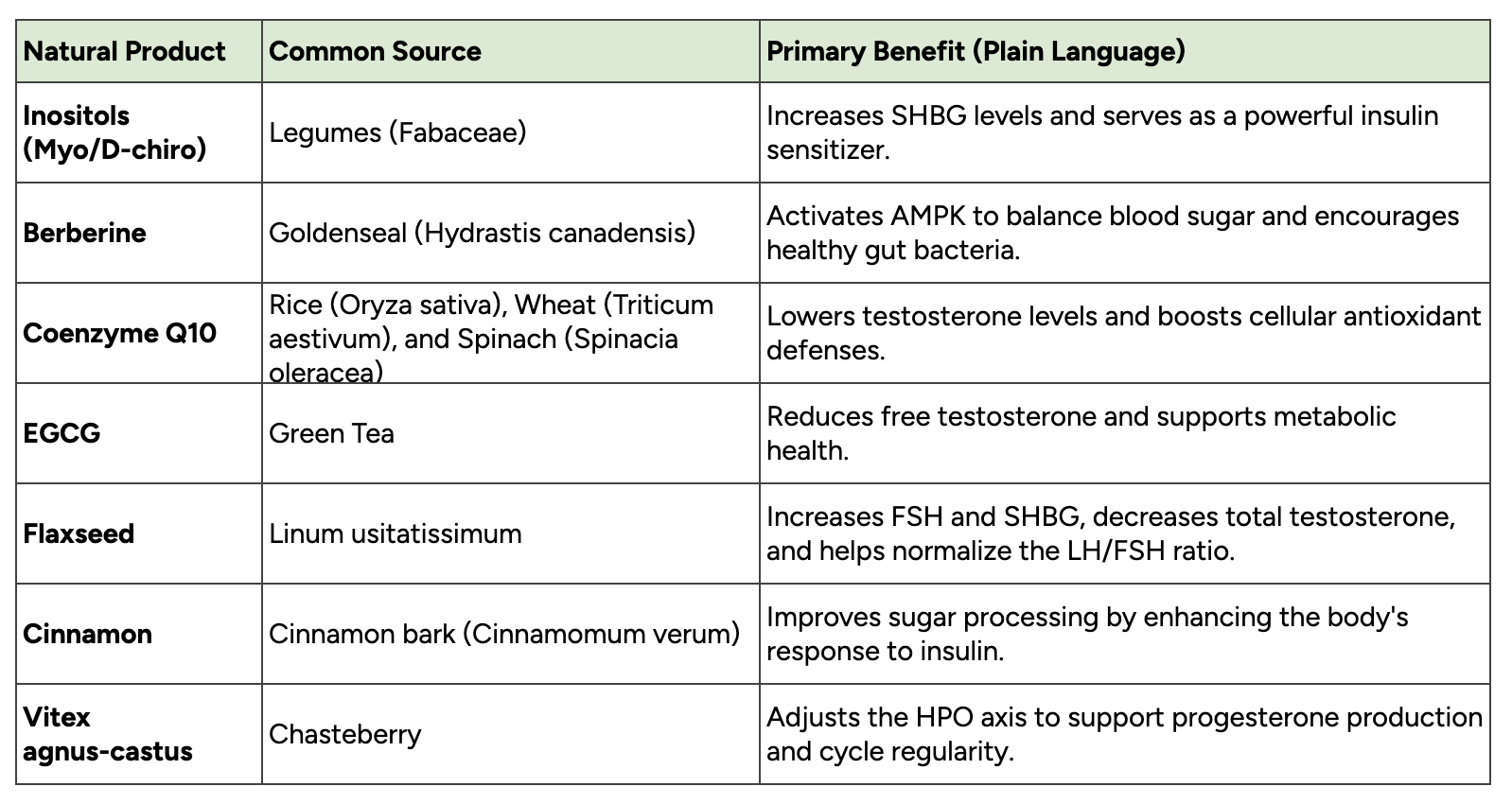
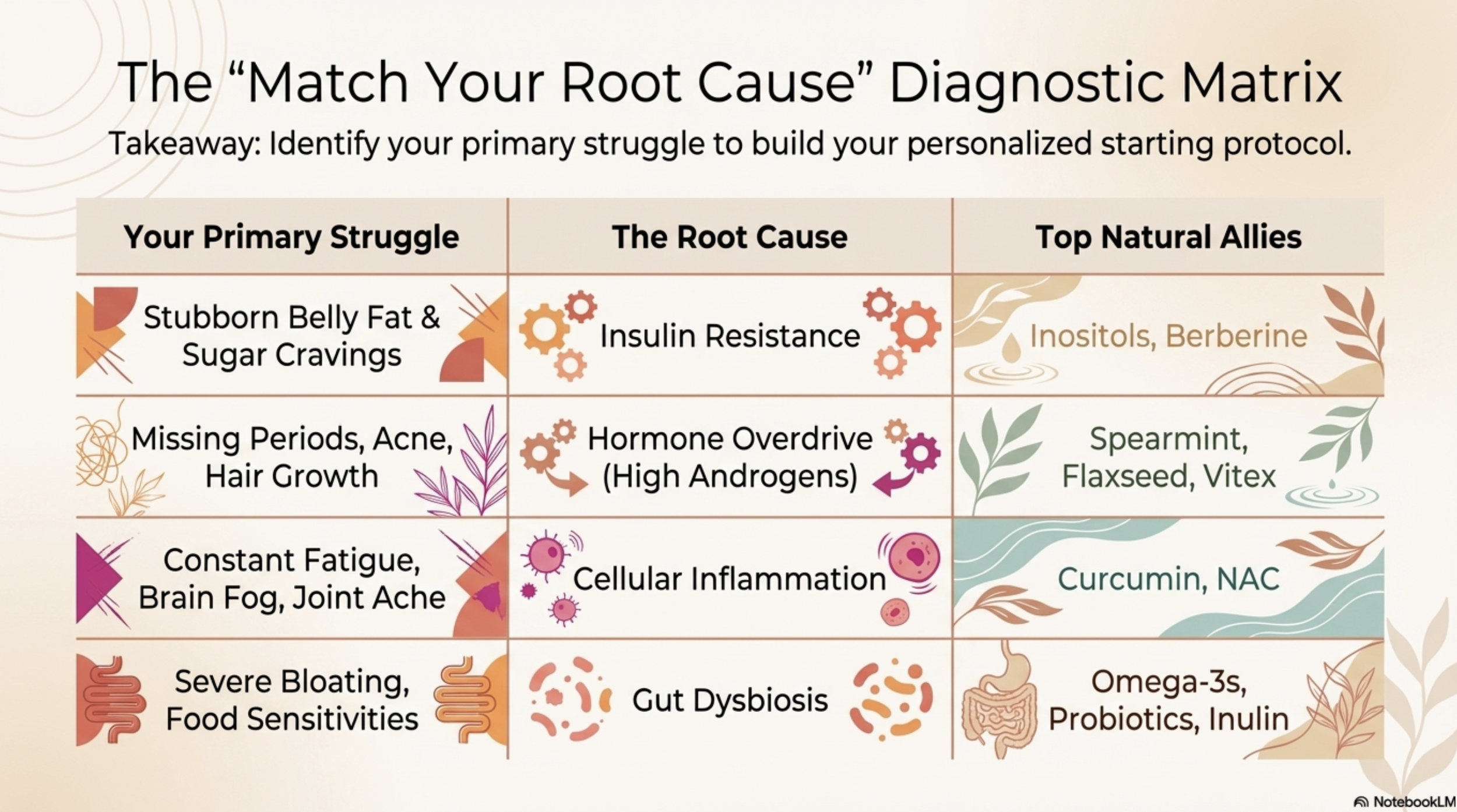
Primary Outcomes (Hormones & Ovulation): Natural compounds like Resveratrol work at the brain level, helping to quiet the misfiring hormonal signals that trigger excess androgen production in the first place. Quercetin, by contrast, works at the ovary level, directly blocking the enzymes responsible for manufacturing those androgens. Together, they tackle the problem from both ends.
Secondary Outcomes (Metabolism & Gut): This research highlights the "metabolic master switch" known as AMPK activation. Compounds like Berberine and Inositol activate this pathway to improve insulin sensitivity. Furthermore, they support the production of Short-Chain Fatty Acids (SCFAs) in the gut, which are essential for reducing systemic inflammation and maintaining gut homeostasis.
The "Stress-Death Axis": Oxidative stress in PCOS can trigger ferroptosis, a specific type of iron-dependent cell death. This leads to granulosa cell dysfunction and broader ovarian dysfunction. It is worth noting that apoptosis — a separate but related form of programmed cell death — is more directly linked to follicular atresia in the research, while ferroptosis primarily drives granulosa cell damage that impairs overall ovarian function. Antioxidants like N-acetylcysteine (NAC) act as a shield, protecting ovarian cells from this oxidative damage and supporting reproductive potential.
Evidence Assessment:
How Strong Are These Findings
As an integrative health expert, it is vital to distinguish between promising theories and proven clinical results.
Strong Evidence: Inositols (specifically the combination of Myo-inositol and D-chiro-inositol) and Berberine have the most robust clinical backing. Human trials consistently demonstrate their ability to improve insulin sensitivity and support ovulatory function.
Preliminary Evidence: Compounds such as Quercetin, Resveratrol, and Formononetin show extraordinary potential in "preclinical" rat and mouse models, but larger human trials are required to determine exact dosages for clinical use.
Key Uncertainties and Limitations
Standardization: Variations in the quality and concentration of natural extracts can affect results.
Bioavailability: Certain compounds, like Curcumin, are notoriously difficult for the body to absorb without specific formulations.
Study Constraints: Many current findings are based on small-scale studies that need broader validation in multi-ethnic populations.
Cultural and Historic Roots
The "novel" bioactive compounds discussed in the 2026 Nutrients review often have deep roots in traditional medicine, now validated by modern pharmacology:
Berberine (Goldenseal) and Curcumin (Turmeric) have been utilized for millennia in Eastern practices to combat inflammatory "heat."
Ginsenosides (Ginseng) and Shatavari (Asparagus racemosus) were traditionally revered as reproductive tonics. Science now confirms they protect ovarian cells and help modulate the HPO axis, proving that ancient wisdom often mirrors modern molecular biology.
The Informed Perspective:
What This Means for You
This synthesis represents an informed perspective on the latest science and is not intended as medical advice. The most empowering takeaway from the 2026 research is the "Paradigm Shift" toward multidisciplinary care:
Lifestyle is the Foundation: The study explicitly states that Lifestyle Modification remains "indispensable." A diet high in fiber and low-glycemic foods, paired with regular exercise, creates the foundation.
The 5% Rule: Research shows that losing just 5% of initial body weight can significantly improve insulin sensitivity and make natural or pharmaceutical interventions much more effective.
Integrative Synergy: Natural products work best when they are part of a holistic plan that includes metabolic monitoring and psychological support.
A Multi-Targeted Future
PCOS is a systemic disorder that requires a systemic solution. While we await further large-scale human trials to perfect standardized delivery methods, the 2026 research offers a roadmap of hope. By targeting the gut-ovarian axis, reducing oxidative stress, and activating metabolic switches like AMPK, natural products provide a promising integrated strategy. They offer a way to move beyond symptom management and toward a future where women can truly restore balance to their metabolic and reproductive health.
Source: Liu, S., Wang, R., Yu, W., Shi, C., Wang, X., Liu, A., & Zhang, L. (2026). Natural Products in the Metabolic and Endocrine Modulation of Polycystic Ovary Syndrome: Current Perspectives. Nutrients, 18(6), 964. https://doi.org/10.3390/nu18060964
Read the full review article here → https://doi.org/10.3390/nu18060964
Continue Exploring PCOS Research
This article is part of an ongoing research series examining PCOS, hormonal health, metabolism, inflammation, and evidence-based interventions.
Explore the full PCOS research guide:
PCOS Explained: Causes, Symptoms, and Evidence-Based Research Insights